
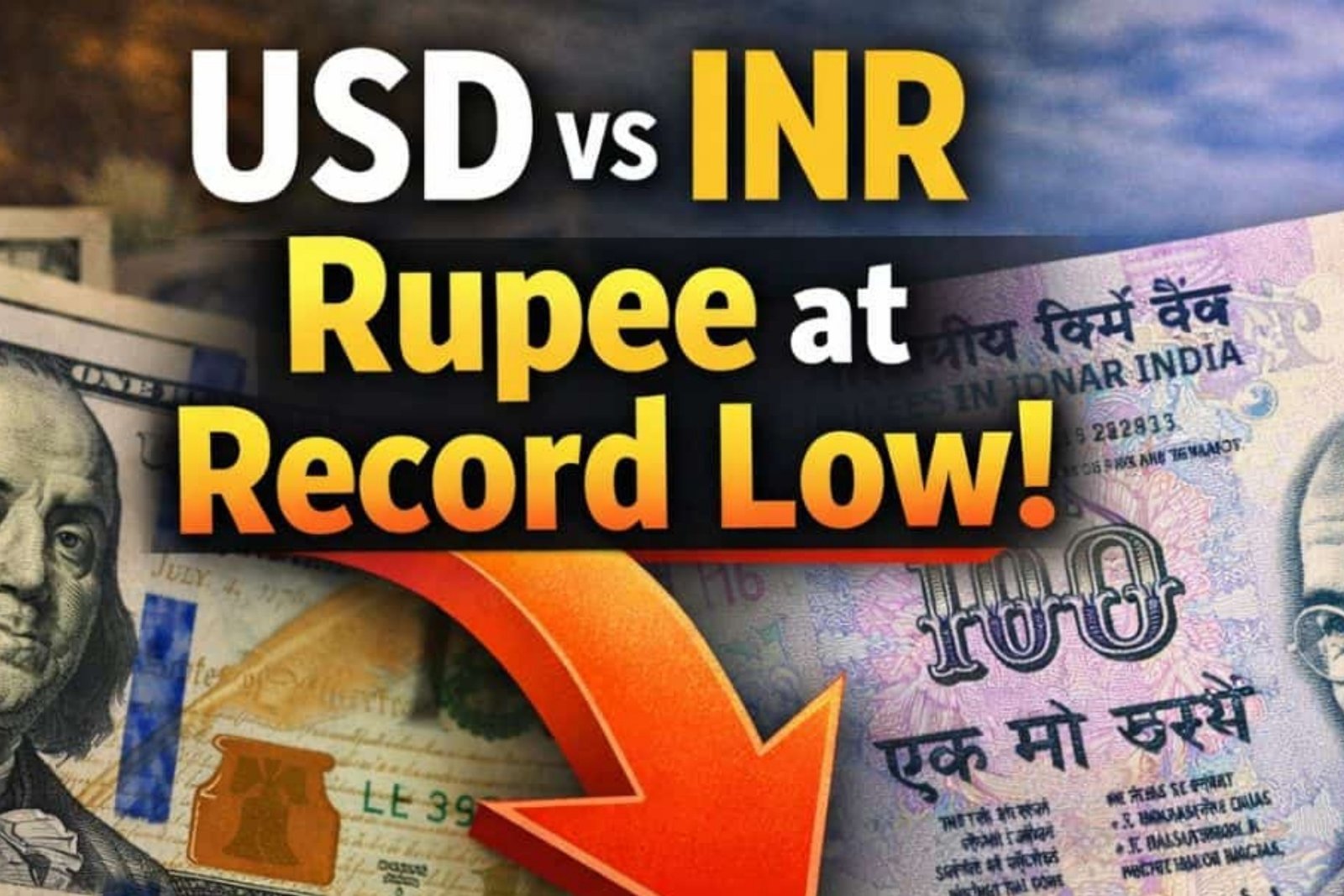
There was a wave of concern in Indian financial markets on Monday as the Indian Rupee hit an all-time low against the US dollar. While it is easy to view currency exchange rates as economic news that does not affect us, the reality is that it does affect us in our own lives in a small way.
If the value of the Rupee drops against the dollar, it means that the cost of importing goods has risen. This, in turn, has an end result on the average consumer. While the Rupee opened at 92.20 against the dollar, it quickly dropped further to an all-time low of 92.52.
The sudden drop has created an environment of concern among economists, investors, and even the average consumer regarding the cause of the slowing economy and what it might do in the coming months.
Rise in oil prices is affecting the value of the Indian Rupee
One of the main reasons that has caused the Indian Rupee to devalue is the increase in oil prices. It has been reported that oil prices have risen by nearly 25% to $116. For a country like India, where oil is to be imported in large quantities, it is creating serious financial problems.
Oil is being bought in dollars, and hence an increase in oil prices would require more dollars to buy the same amount of oil. This would automatically lead to the devaluation of the Indian Rupee. It has been observed that the energy market is facing many ups and downs.
How a Weak Rupee Can Affect Everyday Life
It has to be noted that a weakening currency is not just a number. The effects of a weakening currency can slowly trickle down to various sectors of the economy. If the value of the rupee falls, it would mean that importing goods would be costlier for businesses. The costlier goods would then be passed on to consumers.
Fuel prices would be the first to be affected. Since crude oil has to be imported, a weakening rupee would mean that crude oil would be costlier. This could cause the price of gasoline and diesel to increase. If the price of gasoline increases, the cost of transportation would also increase.
This could cause the price of vegetables, fruits, processed foods, and even essential commodities to increase. Global economic conditions have also been under a lot of stress. The tensions in the Middle East have also not helped the situation.
When economic conditions are uncertain, most global investors prefer to invest in the dollar. The dollar is a much safer bet for investors. The tensions in the Middle East have led to a situation where investors would prefer to put their money in the
What role RBI can play now?
As the Indian Rupee is facing pressure, everyone is looking at the Reserve Bank of India. The Reserve Banks of the world are keeping a watchful eye on the movement of the currency. If the movement is too volatile, the Reserve Banks intervene in the market.
The Reserve Bank of India has foreign exchange reserves that can be utilized for the same. If the Reserve Bank sells the dollars and buys the Rupees, the volatility of the Rupee will come down.
But these steps are taken carefully because the global market also plays an important role in the movement of the Rupee.
Experts say that the Rupee may face pressure if the price of oil remains high and the geopolitical tensions are still present.
What does the future hold?
There are many factors that affect the value of currencies. They include trade balances, inflation, conflicts in the world, etc. It is possible that the value of the Indian Rupee might stabilize if oil prices dip or if there is less conflict in the world. However, it is likely that the pressures on the world markets will continue, resulting in further instability in the value of currencies.

In terms of the common man, the biggest challenge is that of inflation. With the Rupee falling in value and oil prices rising, it is likely that prices will go up in the future. This is the reason why politicians and financial institutions monitor every move in the Forex markets.
FAQ
Q1.Why is the Indian Rupee falling against the US Dollar?
There are many reasons, but the main ones include an increase in crude oil prices, an increase in the demand for the US Dollar to buy imports, and economic uncertainty in the world.
Q2.What was the record low value of the Indian Rupee against the US Dollar recently?
Recently, in the early stages of market trading, the Indian Rupee hit an all-time record low of 92.52 against the US Dollar.
Q3.How does the Indian Rupee falling against the US Dollar affect the common man in our country?
If the Rupee is falling against the Dollar, it would affect the common man in our country because imports would cost more, leading to an increase in crude oil prices, which would indirectly affect many commodities.
Q4.Can the RBI stop the Rupee from falling against the Dollar?
Yes, the Reserve Bank of India has the power to do that by using the foreign exchange reserves.
Q5.Will the prices of Petrol and Diesel increase because of this?
Yes, if the crude oil prices are high and the Rupee is falling against the Dollar, it would indirectly affect many commodities.
Disclaimer: The article is for informational and educational purposes only. Economic conditions, currency values, and oil prices fluctuate frequently in accordance with the changing global market scenario. It is recommended that readers update themselves with the latest financial news and expert views before making any financial decisions.