Timely payment, in most professions, is not merely the question of cash. Income Tax It is concerning respect towards work, trust to the system, equitable professional relationships.
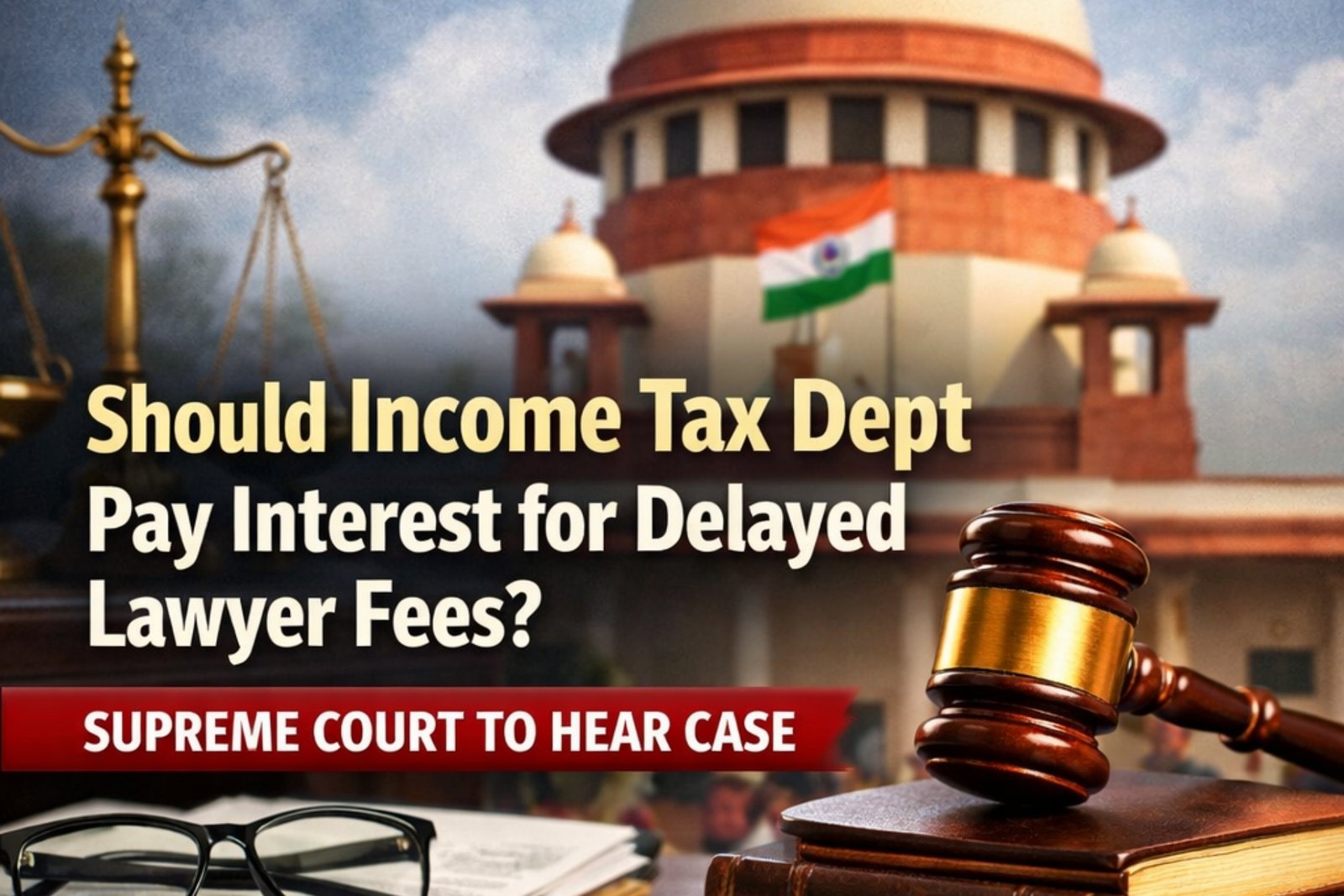
This has recently been a cause of concern in the limelight as the Supreme Court of India is set to look into an essential issue concerning delayed payments to lawyers who represent the Income Tax Department.
The case may have a bearing on the payments made by government departments to professional fees in future.
The reason why the case was brought to the Supreme Court.
The case is based on the case proceedings heard by the Delhi High Court previously. Concerns had been expressed by the panel lawyers representing the Income Tax department on the fact that they were getting their professional fees as a result of delay in getting their payments.
Such lawyers are employed by the department to act on its behalf in different courts and legal cases. As the submissions presented before the court stated, some of the advocates had long waiting lines until their bills were cleared.
Income Tax These delays had a financial burden as well as casting doubt on the efficiency of administration in government departments.
The point of the law in question is now whether the Income Tax Department was also supposed to pay interest under the claim of excessive delay in paying professional fees to its panel counsel.
The Legal Question of the Case Before the Court.
This is because at the core of the question, there is a very basic principle. In the case of delayed payments of services that have already been provided, ought the professional to be paid damages in relation to the delay?
The Supreme Court will consider the fact that the government departments can be liable to payment of interest in the event that the government department fails to disclose payment within a reasonable period.
The attorneys who defend the panel attorneys note that they are being deprived the opportunity to make a living through their profession because of the time wasted in payment and therefore, they should be compensated with interest.
Conversely, the case also questions administrative issues, budgetary approvals and in-house processes through which the government departments go through when clearing bills.
Effects on Government Lawyers and Professional Services.
The ruling on this case may extend its effects to other areas other than the Income Tax Department. A variety of government departments seek external legal advice services of professional consultants to defend them in court, or to provide legal advice.
In case the Supreme Court rules that one should pay interest on the late payments, it will motivate the departments to upgrade their payment system and minimize unnecessary delays.
It may also offer a greater level of protection to the professionals dealing with the government agencies at a financial level.
In the case of lawyers that are on the government panels, the ruling can assist in having increased transparency and accountability in the payment process.
The Administrative Accountability Implication of This.
A bigger problem that is brought out by this case is concerning the responsibility of an administration in a public institution.
On time payments are also a significant aspect of sustaining trust between the government authorities and the professionals.
The Supreme Court ruling would be a clear one which would provide precedence in dissuading more disciplined financial practices in government departments.
It can also compel the authorities to implement more expedited billing and approval processes such that professionals may not have to spend a lot of time waiting to get their work undertaken.
Although the case is still ongoing, this question of fairness, accountability, and financial responsibility is being keenly observed by numerous professionals and legal watchmen, as the court tries to interpret it.
FAQs
Q1.What is the purpose of the Supreme Court listening to this case?
The Supreme Court has been looking into the question of whether the Income Tax Department should pay interest on the amount of time spent paying professional fees to the panel lawyers of the Income Tax Department.
Q2.What was the cause of the legal controversy?
The controversy was occasioned by a number of lawyers who used to represent the Income Tax Department complaining that they were experiencing delays in getting paid to provide their professional services.
Q3.What was the implication of the Delhi High Court?
The matter was initially brought up in the Delhi High Court where it was alleged that there were delays in making payments in the first instance before it finally made its way to the Supreme Court.
Q4.Why is this case important?
The ruling may have a significant precedent on financial responsibility of government departments in case they postpone paying professionals.
Q5.Will this impact on other government departments?
Yes, in the event the court declares that interest would be charged on late payments, it would have an impact on the manner in which other departments in the government will make payments in terms of professional fees in future.
Disclaimer: The article is informational and educational. The data is founded on publicly available accounts on the ongoing court proceedings. Decisions of courts and interpretations can be changed as the case is going on and readers are suggested to consult official court documents or legal authorities to have accurate legal knowledge.