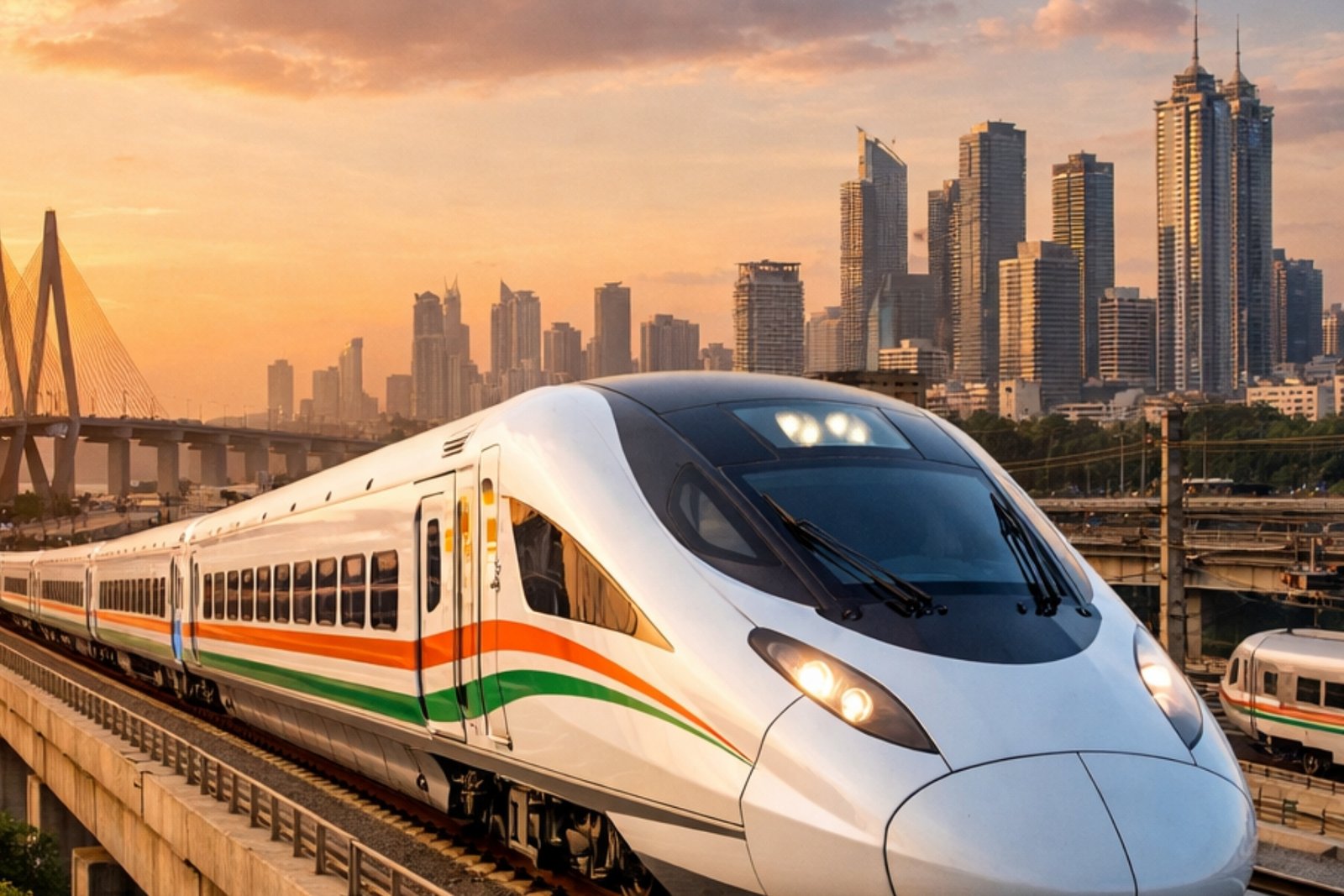
The dream of having a bullet train in India is coming to life in a gradual manner. People have fantasized about making trips between big cities in a lightning speed as they do in Japan and Europe. Now that vision is actualizing.
The first bullet train corridor in India is set to start with Bharat-made trainsets as per a recent parliamentary panel report, an important milestone in the technology and self reliance of railway in the country.
One of the ambitious infrastructure projects in India is the Mumbai Ahmedabad High-Speed Rail. This 508-kilometer corridor is meant to revolutionise the way persons carry out journeys between two of the most economic centers in the nation. The fact that the initial working trains will be developed in India makes the latest update even more exciting.
India-Planned Bullet Trainsets to Be the First.
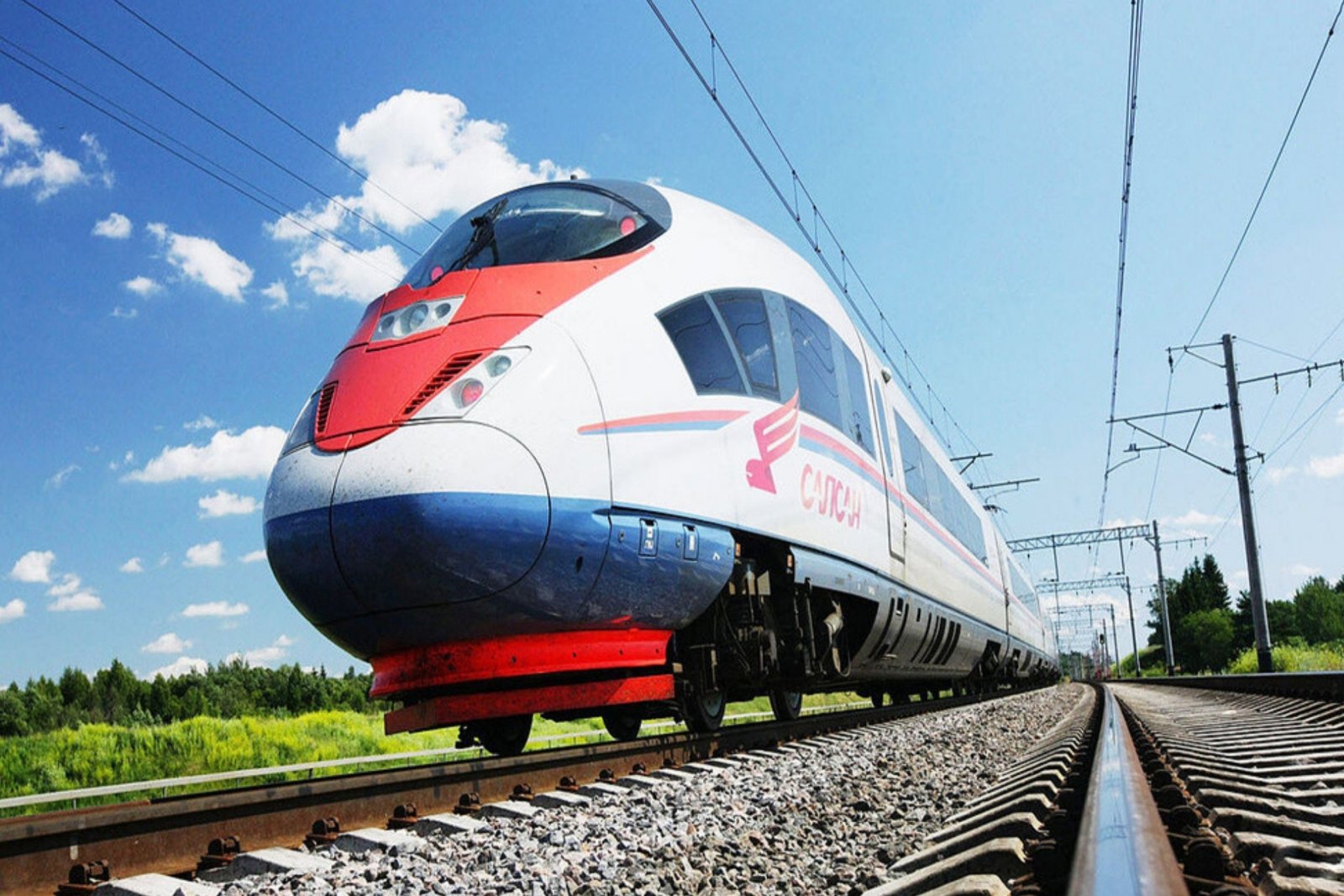
It has been reported by the Standing Committee on Railways that the B28 high-speed trainsets will operate on the first operational section of the corridor, which is being developed in India.
The trains are being developed by BEML in Bengaluru and the project is a significant move in India developing the high-speed rail technology themselves.
The initial phase of the project operation would be the 97-kilometer stretch between Surat and Vapi and it might start its services in August 2027. The trains will initially run at a speed of approximately 250 km per hour with an initial design of up to 280km per hour.
The technology can be enhanced in future to accommodate speed of 320 kmph or even 350 kmph. The significance of this move is in its indication of increasing confidence among India in its ability to create advanced railway systems within the country and not be completely dependent on the imported technology.
Japanese Train Procurement Problems.
In the beginning, it was not clear which first trains on the corridor could be Japanese. There is a good technical collaboration between the project and Japan particularly with the well known Shinkansen bullet train technology.
Japan is also designing E10 Series Shinkansen which should be incorporated into the project in the future. According to the report, however, obtaining rolling stock in Japan has been a problem in the required time.
It is as a result of this that Indian authorities made a decision to proceed with locally constructed trains to evade the delays in the introduction of the service. This move will keep the project on track and in addition enhance manufacturing capacity of India in the railway industry.
Another solution is the use of an advanced Signaling System of Safety and Speed.
The safety systems of high-speed Rail must be very accurate. In this project, ETCS Level 2 will be used as the signaling technology, which is one of the latest railway signaling technologies in the world.
This system enables trains to move at extremely rapid speeds and also enables safety as the trains and control systems get in constant contact with one another.
The signalling network is in the process of being laid along the route and it is planned to facilitate speeds of between 250 kmph and 280kmph at the first stage.
New High-Speed Corridors Announced in Budget 2026 27.
Some new high-speed rail corridors have also been announced in the Union Budget 202627 by the government. It is hoped that these routes will become the economic growth linkages in various parts of the state.
Some of the proposed corridors are Mumbai-Pune, Pune-Hyderabad, Hyderabad-Bengaluru, Chennai-Bengaluru, Delhi-Varanasi and Varanasi-Siliguri.
Government has given sanctions on close to 4,000 kilometers of high-speed rail development and this is an indication of a long term vision that involves transformation of the Indian railway network.
Provided that those plans are implemented successfully, India may become one of the countries to have one of the largest high-speed rail systems in the world very soon.
A Big Stride towards Self-reliant Rail Technology.
It is not just a technological feat that the first bullet train will be run using trainsets made in Bharat. It is an expression of India in its quest to be self-sufficient in high-end transport infrastructure.
The construction of high-speed trains on the national stage will contribute to the decrease in the reliance on imports, the emergence of new production prospects, and the acquisition of skills in the field of the latest railway engineering.
In the long run, this capability might also result in exporting the railway technology to foreign nations. The Mumbai Ahmedabad corridor is thus not merely a transport project it is also a dream of the Indian future in terms of infrastructure and innovativeness.
FAQs
Q1.Is India really going to have a first bullet train?
According to the parliamentary report, the first functional section between Surat and Vapi is likely to start operations in August 2027.
Q2.What is the velocity of the Indian bullet train?
It will start with the train running at approximately 250kmph and has a design capacity of 280kmph, and in the future, may be upgraded to an extent of 320-350kmph.
Q3.Who is constructing the Indian sets of bullet trains?
BEML is developing B28 high-speed trainsets at Bengaluru, India.
Q4.Do the Japanese bullet trains run in India also?
Continue Yes, Japan is working on the E10 Series Shinkansen that can be used in the project later after procurement issues are sorted.
Q5.What is the duration of the MumbaiAhmedabad bullet train line?
The overall distance of the corridor is about 508 kilometers.
Disclaimer: This is an informational and educational paper. The timelines, speeds and deployment plans of the projects are founded on the official reports and government announcements existing at the time of writing. Implementation plans may vary in actual implementation based on infrastructure development and policy choices.
Also Read:
Air India Flight Tickets to Get Costlier as Airline Introduces Fuel Surcharge